Introduction to the Material World
Metals and alloys are everywhere, even when most people do not stop to notice them. They shape city skylines, hold together bridges, run through cars, power electrical systems, support tools in workshops, and form the hidden backbone of machines used every day. From a simple kitchen spoon to an advanced aircraft engine, metals remain some of the most important materials ever discovered and refined by human hands. For beginners stepping into fabrication, manufacturing, engineering, or DIY building, understanding metals and alloys is one of the most valuable foundations they can build. At first glance, metal may seem like a simple category. It can look hard, shiny, and strong, and that description is not entirely wrong. But the world of metals is much more complex and much more interesting. Different metals behave in dramatically different ways. Some are lightweight, some are heavy, some resist rust, some conduct electricity extremely well, and some can survive intense heat or crushing loads. Alloys take this a step further by blending metals or combining metals with other elements to create materials with even better performance. Once beginners understand the basics, the logic behind material selection starts to become much clearer.
A: Clear design intent, suitable material, controlled setup, safe workflow, and repeatable inspection.
A: It shows how the material and tool settings behave before the final part is at risk.
A: No. Tighter tolerance costs more and only helps when the function requires it.
A: Tool wear, speed, feed, abrasive choice, heat, vibration, or weak support can all contribute.
A: Heat, internal stress, uneven removal, poor clamping, or forming pressure can move material.
A: Use templates, mark clearly, cut oversize when appropriate, and inspect before each irreversible step.
A: Prototypes test ideas, while production work controls repeatability.
A: Surface prep, cleaning, masking, curing, and inspection often require more time than the main cut.
A: Ventilation and dust control are often overlooked until a process creates fumes or fine particles.
A: Confirm fit, function, finish, documentation, and any maintenance needs.
What Is a Metal?
A metal is a naturally occurring material or refined element that typically has properties such as strength, durability, conductivity, luster, and malleability. In practical terms, metals are valued because they can be shaped, cut, heated, joined, and used in applications that demand reliability. Iron, aluminum, copper, gold, silver, titanium, and nickel are just a few examples of well-known metals, and each one has a distinct personality when used in real-world projects.
One of the reasons metals are so important is that they combine utility with adaptability. They can be cast into shapes, rolled into sheets, drawn into wires, machined into precision parts, or forged into incredibly strong forms. This versatility allows metals to serve both massive industrial systems and tiny electronic components. A metal can be used in a high-rise structure, a bicycle frame, a cooking pan, or a circuit board, depending on its specific properties.
In science, metals are defined by their atomic structure and the way their electrons move. For most beginners, though, what matters most is that metals are dependable materials with predictable performance. They often provide a combination of strength and workability that few other material categories can match.
What Is an Alloy?
An alloy is a material made by combining a metal with one or more other elements to improve or modify its properties. Sometimes the added element is another metal, and sometimes it is not. The goal is to create a material that performs better than the original metal in one or more ways. This could mean greater strength, better corrosion resistance, reduced weight, improved hardness, easier machinability, or greater resistance to heat.
Steel is one of the most famous examples of an alloy. Pure iron is useful, but when carbon is added in controlled amounts, it becomes steel, which is stronger and more practical for construction and manufacturing. Stainless steel goes even further by adding chromium and sometimes nickel, helping the metal resist rust and staining. Brass, another familiar alloy, is made primarily from copper and zinc. Bronze is usually copper combined with tin. These examples show how alloying can turn a good material into a highly specialized one. For beginners, the simplest way to think about alloys is this: they are custom-built metals designed for better performance. Instead of accepting the limitations of a pure metal, manufacturers adjust the recipe to get the traits they need. That is why alloys dominate so much of the modern built environment.
Why Metals and Alloys Matter So Much
Metals and alloys matter because modern civilization depends on them. They support transportation, communication, energy production, medicine, architecture, and manufacturing. Without metals, there would be no strong building frames, no reliable electrical networks, no durable tools, and no engines capable of moving vehicles at scale. Their value is not limited to strength alone. Many metals are also essential because they transfer electricity, handle heat, resist wear, and maintain structural integrity over time.
Alloys matter just as much because the demands of the real world are rarely simple. A builder may need a material that is strong but also corrosion-resistant. A fabricator may need something light enough to reduce weight but durable enough to handle repeated stress. A designer may need a metal that can be shaped with precision and still maintain an attractive finish. Alloys make these goals achievable by allowing engineers and manufacturers to fine-tune performance.
For anyone entering the world of materials, the importance of metals and alloys cannot be overstated. They are not just raw substances. They are problem-solving materials that make practical innovation possible.
The Key Properties That Define Metals
To understand metals and alloys, beginners need to understand the core properties that separate one material from another. Strength is one of the most obvious. It describes how well a metal can handle force without bending, breaking, or permanently deforming. Hardness is related but different. It refers to a material’s resistance to surface wear, scratching, or indentation. Toughness measures how well a metal absorbs energy and resists cracking under impact. Weight is another important factor. Some metals are heavy and dense, while others offer impressive strength at a much lower weight. This is why aluminum and titanium are so attractive in transportation and aerospace applications. Corrosion resistance is also critical. Some metals rust or degrade quickly when exposed to moisture or chemicals, while others remain stable for years in harsh conditions.
Conductivity matters as well. Copper, for example, is widely used because it carries electricity so efficiently. Thermal conductivity determines how well a material transfers heat, which can be useful in cookware, heat exchangers, and industrial systems. Malleability and ductility describe how easily a metal can be shaped without breaking. A malleable metal can be pressed or hammered into sheets, while a ductile one can be drawn into wires. These properties explain why no single metal is perfect for every job. Material selection is always about matching the right properties to the demands of the application.
Pure Metals vs Alloys
Pure metals and alloys may sound similar, but they perform differently. A pure metal contains only one elemental metal with minimal impurities. Gold, copper, and aluminum can all exist in relatively pure forms. These materials often have useful characteristics, especially in applications where conductivity, softness, or chemical stability is important. However, pure metals are not always ideal for demanding structural or industrial work.
Alloys are generally preferred because they can be engineered for better performance. Pure aluminum, for example, is light and corrosion-resistant, but many aluminum alloys are much stronger and better suited for fabrication. Pure iron is relatively soft, but steel, which is an alloy based on iron, is far more useful across construction and manufacturing. This pattern repeats across the materials world. Alloying turns basic metals into tailored solutions.
For beginners, this is an important lesson. The metal that sounds familiar is not always the material actually being used in the final product. Many everyday objects rely on alloys rather than pure metals because alloys offer a better balance of strength, stability, cost, and performance.
Common Types of Metals Beginners Should Know
Some metals appear so often in real-world work that they form the core vocabulary of fabrication and manufacturing. Iron is important because it serves as the base for many ferrous materials, especially steel. Steel itself is arguably the most important industrial alloy in the world because of its strength, versatility, and relatively low cost. Stainless steel adds corrosion resistance and is common in food equipment, architecture, and tools.
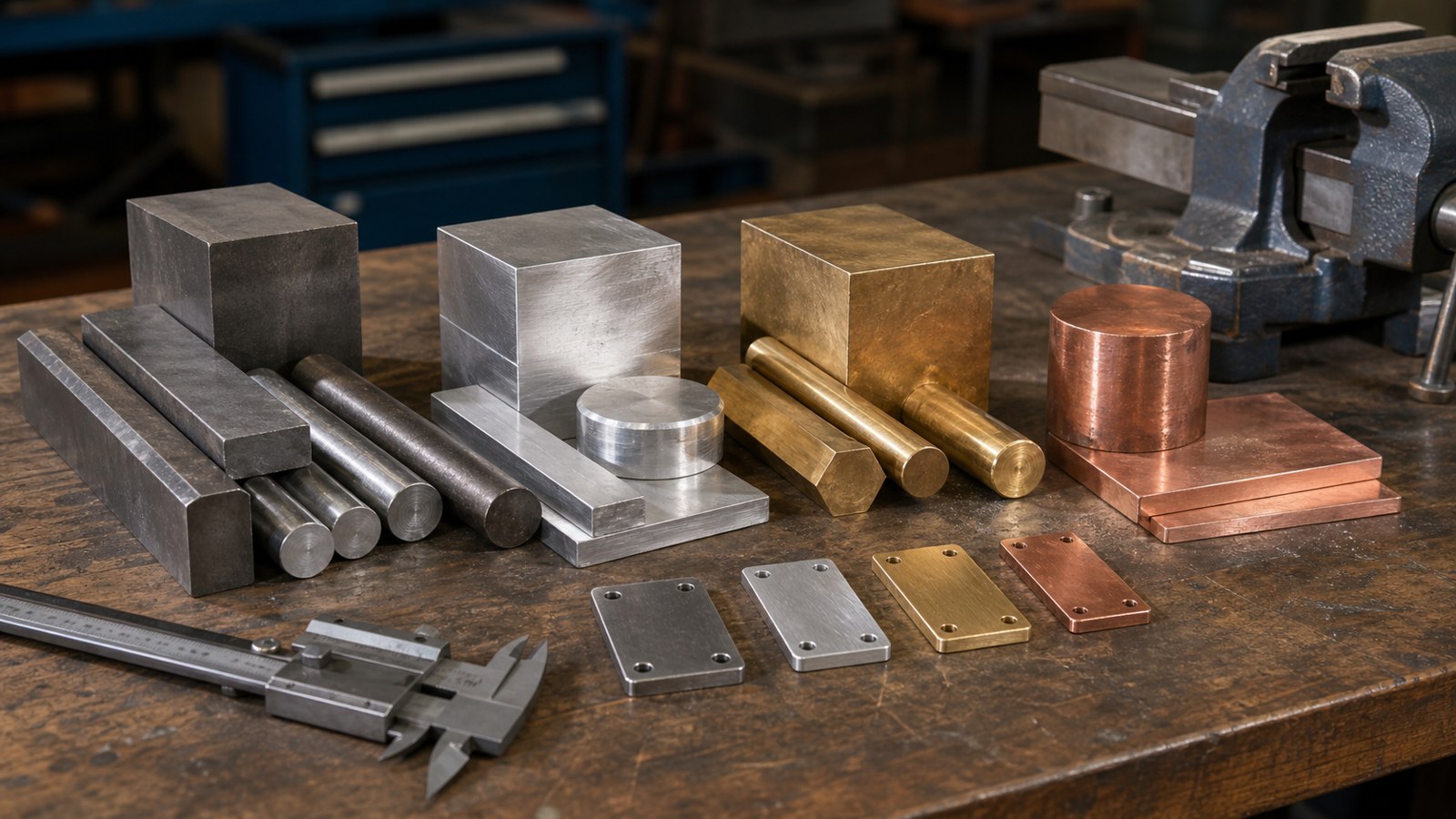
Aluminum is another essential metal. It is lightweight, corrosion-resistant, and widely used in transportation, consumer goods, and structural parts where lower weight is valuable. Copper is famous for its electrical performance and is widely used in wiring, plumbing, and electronics. Brass and bronze are classic copper-based alloys with excellent machinability, durability, and visual appeal. Titanium is known for its high strength-to-weight ratio and corrosion resistance, making it popular in aerospace, medical, and high-performance industries. Nickel, zinc, magnesium, and cast iron also play important roles across different sectors. Each material has a reason for being chosen, and that reason usually comes back to a balance of properties and cost.
Ferrous and Non-Ferrous Metals
One of the easiest ways to classify metals is by separating them into ferrous and non-ferrous groups. Ferrous metals contain iron as their main ingredient. These materials are often strong, durable, and magnetic. Steel and cast iron are major examples. They are used heavily in construction, industrial equipment, automotive structures, and applications where load-bearing performance matters.
Non-ferrous metals do not contain significant amounts of iron. Aluminum, copper, brass, bronze, lead, zinc, and titanium all fall into this category. These metals are often chosen for their corrosion resistance, conductivity, lower weight, or non-magnetic behavior. In environments where rust is a concern or where weight savings are important, non-ferrous metals often have the advantage.
This classification is useful because it helps beginners quickly understand broad material behavior. Ferrous often points toward strength and structural use. Non-ferrous often points toward conductivity, corrosion resistance, or specialized performance.
How Alloys Are Made and Why That Matters
Alloys are made by carefully combining molten materials in controlled proportions, then cooling and processing them to achieve the desired structure. The exact ingredients and the way the material is heated, cooled, rolled, forged, or treated afterward all influence final performance. Even small changes in composition can make a major difference in hardness, toughness, corrosion resistance, or machinability.
This matters because alloy design is one of the most powerful tools in modern materials engineering. Manufacturers do not just pick a random mix of ingredients. They choose combinations with purpose. Carbon can increase the strength of steel. Chromium can improve corrosion resistance. Nickel can improve toughness and performance in extreme conditions. Zinc can help create brass with good machinability and useful strength. For beginners, this is where the subject becomes especially exciting. Metals are not static. They can be tuned, refined, and optimized. The material in a bridge beam is different from the material in a kitchen sink, a drill bit, or an aircraft panel because each alloy is designed to solve a different problem.
How Metals and Alloys Are Used in the Real World
The real-world uses of metals and alloys are almost endless. In construction, steel provides the structural strength needed for buildings, bridges, and infrastructure. In transportation, aluminum and advanced steel alloys help reduce weight while maintaining safety and durability. In electronics, copper and specialized metal alloys enable efficient energy flow and dependable signal transmission.
In fabrication shops, metals and alloys are selected based on how they cut, weld, bend, or machine. A fabricator making brackets may choose mild steel for strength and affordability. A manufacturer producing marine hardware may choose stainless steel or bronze for corrosion resistance. An aerospace engineer may choose titanium or aluminum alloys to reduce weight while preserving structural performance.
This practical variety is one of the reasons metals are so central to modern work. There is a metal or alloy for nearly every challenge, and learning how to match material to application is one of the most valuable beginner skills in the field.
Choosing the Right Metal or Alloy
Choosing the right material is never just about what looks strongest or most familiar. It involves understanding the job the material must do. Will it be exposed to moisture, chemicals, or salt air? Does it need to carry electrical current? Must it be lightweight? Will it be welded, bent, or machined? Does budget matter more than premium performance?
These questions guide material selection. A beginner may be tempted to think stronger is always better, but that is not always true. A material that is too hard may be difficult to machine. A strong metal that rusts quickly may fail in outdoor use. A lightweight option may cost more than the project can justify. The best choice is usually the one that balances performance, durability, cost, and ease of fabrication. That is why a beginner’s guide to metals and alloys is really a guide to smart decision-making. The more clearly you understand material properties, the better your choices become.
The Beginner Advantage of Learning Metals Early
For newcomers to fabrication, design, or manufacturing, learning metals early creates a huge advantage. It improves the way you read product specs, understand tools, compare materials, and plan projects. Instead of guessing, you begin to recognize why certain materials appear again and again in certain environments. You start to see the logic behind steel in beams, copper in wiring, aluminum in transport, and stainless steel in clean or wet conditions. This knowledge also makes the rest of the materials world easier to understand. Once you grasp the relationship between structure, composition, and performance, other topics such as welding, machining, corrosion, and heat treatment begin to make more sense. Metals and alloys are not just a subject to memorize. They are a gateway to understanding how things are built and why they last.
Final Thoughts
Metals and alloys are among the most important materials in the modern world because they combine strength, versatility, and adaptability in ways that few materials can match. A metal begins as a natural element with useful properties, while an alloy takes that concept further by combining ingredients to improve performance. Together, they make possible the tools, machines, structures, and systems that shape everyday life.
For beginners, the best place to start is with the big picture. Learn what metals are, what alloys do, and how properties such as strength, corrosion resistance, conductivity, and weight affect performance. From there, material selection becomes less confusing and far more interesting. The world of metals and alloys is deep, practical, and full of discovery, and once you begin to understand it, you start seeing the built world in an entirely new way.