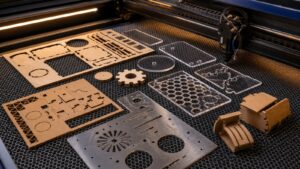
Laser Cutting & Etching on Fabrication Streets is where beams of light turn flat stock into crisp parts, intricate patterns, and custom details. This sub-category is your front-row seat to machines that trade spinning cutters for focused photons, slicing plywood, acrylic, thin metals, and more with shocking accuracy. We’ll walk through how vector and raster jobs differ, why kerf and power settings matter, and how to dial in clean edges without char or melt. You’ll see how ventilation, material choice, and bed size shape what you can safely and reliably make. From simple brackets and signage panels to layered models, jigs, and branded prototypes, Laser Cutting & Etching helps you move from “cool idea” to repeatable files that run cleanly every time. Whether you’re feeding a small desktop unit or a production-scale bed, you’ll find practical guidance on setup, alignment, and maintenance. Every article is built to turn glowing status lights, focusing lenses, and G-code cousins into a familiar toolkit—and to help your next project emerge from the smoke with sharp lines and smooth detail.
A: Most workflows use vector design tools and either built-in or external laser control software.
A: Many woods, papers, some plastics, fabrics, and thin metals work; always follow manufacturer safety guidance.
A: Power may be too high or speed too low; air assist, masking, and tuned settings can help.
A: Check frequently and clean whenever you see residue; clean optics protect power and quality.
A: Not always—metal work typically needs higher power and appropriate machine design and safety.
A: Yes, effective exhaust and filtration are essential for managing smoke and fumes safely.
A: Kerf might not be accounted for; adjust slot sizes to match your machine’s cut width.
A: Lower power, faster passes, good support, and careful part spacing can all help.
A: Yes; use separate layers or colors to apply different settings within a single run.
A: Simple key tags, coasters, or small organizers that use basic shapes and straightforward joints.