Q: What’s the difference between pure water and abrasive waterjet?
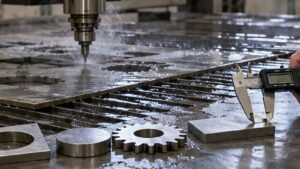
A: Pure water cuts softer materials; abrasive adds garnet to cut metals, stone, and thicker stock.
Q: Does waterjet cutting create a heat-affected zone?
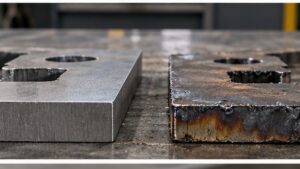
A: Typically no—it's considered cold cutting, which helps reduce warping and metallurgical changes.
Q: Why do I see wavy lines on the cut edge?
A: Often feed rate is too fast, quality is set too low, or the nozzle/orifice is worn.
Q: How do I reduce taper on thick parts?
A: Slow the cut, increase quality, ensure good standoff control, or use taper compensation if available.
Q: What abrasive should I use?
A: Garnet is most common; mesh size and flow rate depend on material and finish needs.
Q: Can waterjet cut carbon fiber and composites?
A: Yes, but piercing and support must be dialed in to reduce fraying or delamination.
Q: How tight are tolerances on a waterjet?
A: It varies by machine, thickness, and quality settings—expect best results on thinner material and higher quality modes.
Q: What causes inconsistent cutting or sudden rough sections?
A: Abrasive feed issues, moisture clumps, pressure fluctuations, or a damaged mixing tube are common culprits.
Q: Do parts need finishing after waterjet cutting?
A: Sometimes just a light deburr; thicker cuts or faster settings may need sanding or machining for critical edges.
Q: How do I keep small parts from falling into the tank?
A: Use microtabs, smart cut sequencing, and supportive slats/fixturing to prevent tip-up.