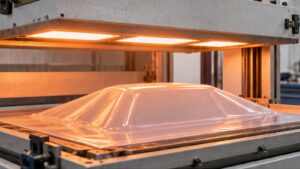
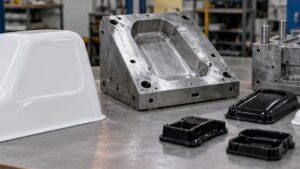
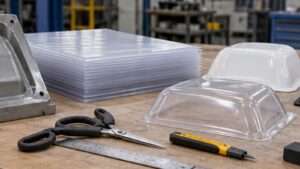
Vacuum forming is the fabrication magic trick that turns a flat sheet of plastic into a crisp, dimensional part in minutes. On Fabrication Streets, this category is your launchpad into the world of heated thermoplastics, precision molds, and that satisfying moment when vacuum pulls a softened sheet tight—capturing every radius, rib, and contour like a snapshot in 3D. From rugged ABS panels and clean HIPS prototypes to crystal-clear PETG covers, vacuum forming powers everything from product packaging and cosplay armor to machine guards, dashboards, and lightweight enclosures. The craft lives in the details: even heating without thin spots, smart draft angles for clean releases, venting that prevents trapped air, and trimming methods that make parts look factory-finished. Whether you’re building simple shop rigs or dialing in production cycles with plug assists and temperature zones, the process rewards creativity and repeatability. Explore our guides on materials, mold making, texture, forming defects, and real-world workflows—so your next pull looks sharp, strong, and ready to ship.
A: HIPS and ABS are common for prototypes and rugged parts; PETG is popular for clear guards and covers.
A: Check vacuum leaks, add vent holes to deep pockets, and ensure the sheet is heated evenly before forming.
A: Usually tight geometry, too much sheet, uneven heating, or slow forming—adjust spacing, heat profile, and pull speed.
A: A few degrees is a great start—more draft helps release and reduces scuffing, especially on deeper parts.
A: Deep draws stretch material—use a plug assist, reduce heat, or redesign with larger radii to improve thickness.
A: Not easily—undercuts lock parts on the mold; use split molds or redesign to avoid trapped geometry.
A: Shop-vacs can work for simple shapes; pumps/tanks give faster response and better detail on demanding pulls.
A: Polish and seal the mold surface; keep it clean—every defect or dust speck transfers to the part.
A: After it fully sets—trim too early and edges can distort or creep as the plastic finishes cooling.
A: Use trim fixtures and document your heat time, sag target, vacuum timing, and material details.