The New Story of Plastic Recycling
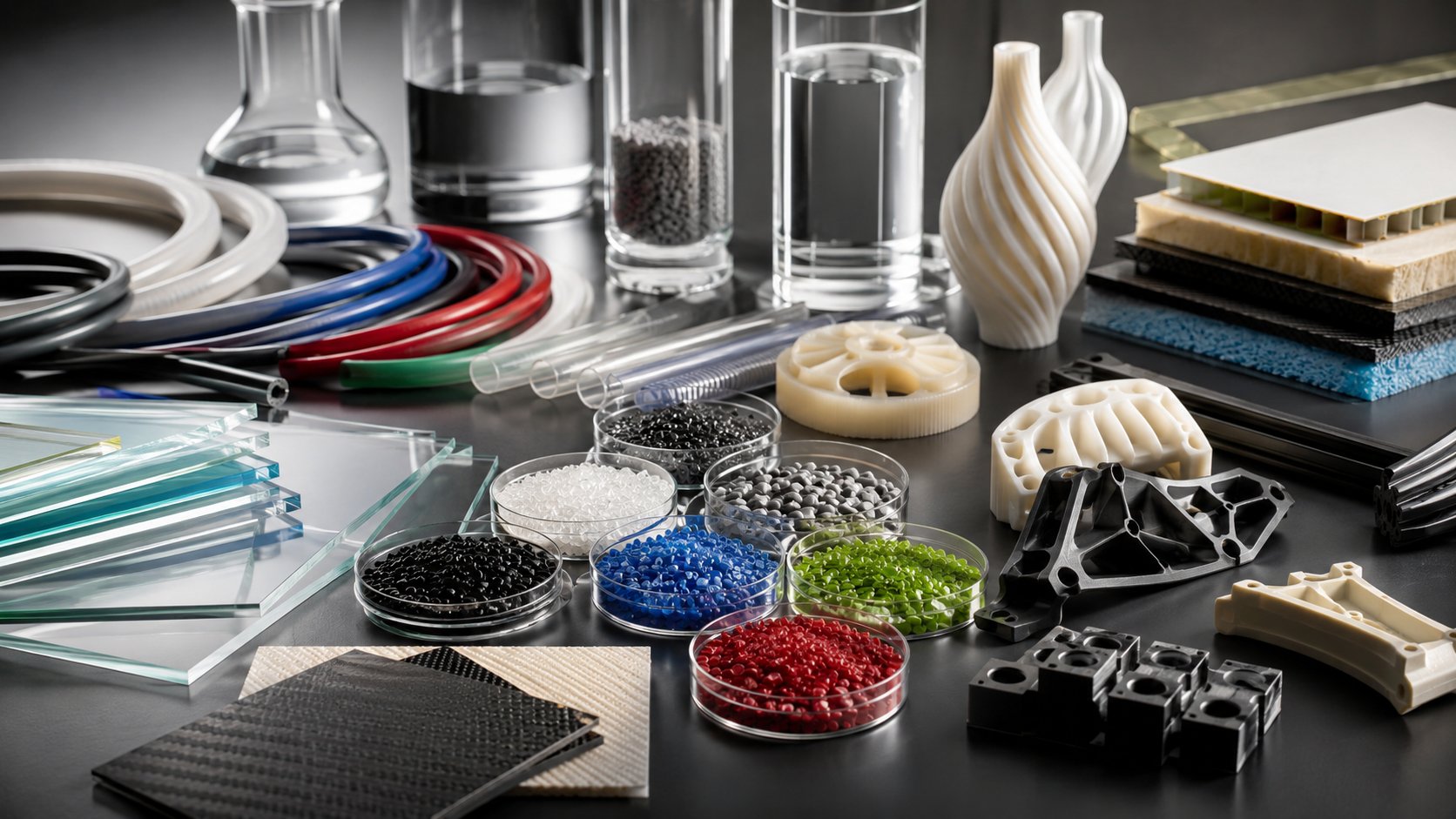
Plastic recycling has entered a new era. For decades, many people imagined recycling as a simple loop: place a bottle in a bin, send it to a facility, melt it down, and turn it into something new. In reality, plastic recycling is a sophisticated system that involves collection, sorting, cleaning, shredding, testing, reprocessing, quality control, and manufacturing. Today, the field is expanding even further with chemical recycling, advanced polymer recycling, digital sorting, improved design standards, and new circular economy strategies. Plastics are valuable because they are lightweight, durable, moldable, and versatile. Those same qualities can make them challenging at end of life. A clear PET water bottle, a colored HDPE detergent container, a flexible film pouch, a multilayer food wrapper, a polypropylene cap, a nylon component, and a PVC pipe do not all recycle the same way. Each material has its own chemistry, melting behavior, additives, colors, contamination risks, and market value. The future of plastic recycling depends on understanding these differences. Better recycling is not just about collecting more plastic. It is about collecting cleaner material, sorting it more accurately, designing products for recovery, choosing compatible polymers, using the right recycling technology, and building demand for recycled content. When all of those pieces work together, plastic waste becomes a feedstock rather than a problem.
A: Clear design intent, suitable material, controlled setup, safe workflow, and repeatable inspection.
A: It shows how the material and tool settings behave before the final part is at risk.
A: No. Tighter tolerance costs more and only helps when the function requires it.
A: Tool wear, speed, feed, abrasive choice, heat, vibration, or weak support can all contribute.
A: Heat, internal stress, uneven removal, poor clamping, or forming pressure can move material.
A: Use templates, mark clearly, cut oversize when appropriate, and inspect before each irreversible step.
A: Prototypes test ideas, while production work controls repeatability.
A: Surface prep, cleaning, masking, curing, and inspection often require more time than the main cut.
A: Ventilation and dust control are often overlooked until a process creates fumes or fine particles.
A: Confirm fit, function, finish, documentation, and any maintenance needs.
Why Plastic Recycling Matters
Plastic recycling matters because plastics are deeply embedded in modern life. They protect food, reduce shipping weight, insulate electronics, support medical safety, preserve products, and make manufacturing more efficient. Yet plastic waste can create serious environmental challenges when products are poorly designed, improperly discarded, or not recovered through effective systems.
Recycling helps reduce the need for virgin raw materials, extends the value of existing resources, lowers waste sent to landfills, and supports more circular manufacturing. It also gives brands, designers, and manufacturers a way to reduce environmental impact while maintaining the benefits that plastics provide.
However, recycling is not a magic solution by itself. It works best when paired with smarter product design, reuse systems, responsible consumption, improved collection infrastructure, and realistic material choices. A plastic product that is impossible to sort or made from many bonded layers may be difficult to recycle, even if the base materials technically have value. A product designed with one recyclable material, clear labeling, minimal contamination, and strong end-market demand has a much better chance of staying in circulation.
The First Step: Collection and Sorting
Plastic recycling begins with collection. Material may come from curbside programs, deposit return systems, commercial waste streams, manufacturing scrap, retail collection points, construction sites, agricultural operations, or industrial facilities. The quality of the collected material has a major effect on what recycling method can be used. After collection, plastics must be sorted. Sorting is one of the most important stages in the recycling process because different polymers cannot always be processed together. PET, HDPE, PP, PVC, LDPE, PS, ABS, nylon, and other plastics each behave differently under heat and mechanical stress. Mixing incompatible plastics can weaken recycled material, discolor it, contaminate it, or make it unsuitable for higher-value applications.
Modern sorting facilities may use screens, magnets, air classifiers, optical sorters, infrared sensors, density separation, robotics, and manual quality checks. The goal is to separate plastics by resin type, color, shape, size, and contamination level. For example, clear PET bottles may be separated from colored PET, HDPE natural containers may be separated from pigmented HDPE, and flexible films may require a different recovery stream than rigid containers. Sorting is where recycling success often begins or fails. Clean, consistent material can become valuable recycled resin. Mixed, dirty, or poorly identified material may be downgraded, rejected, or sent to alternative recovery pathways.
Mechanical Recycling: The Workhorse of Plastic Recovery
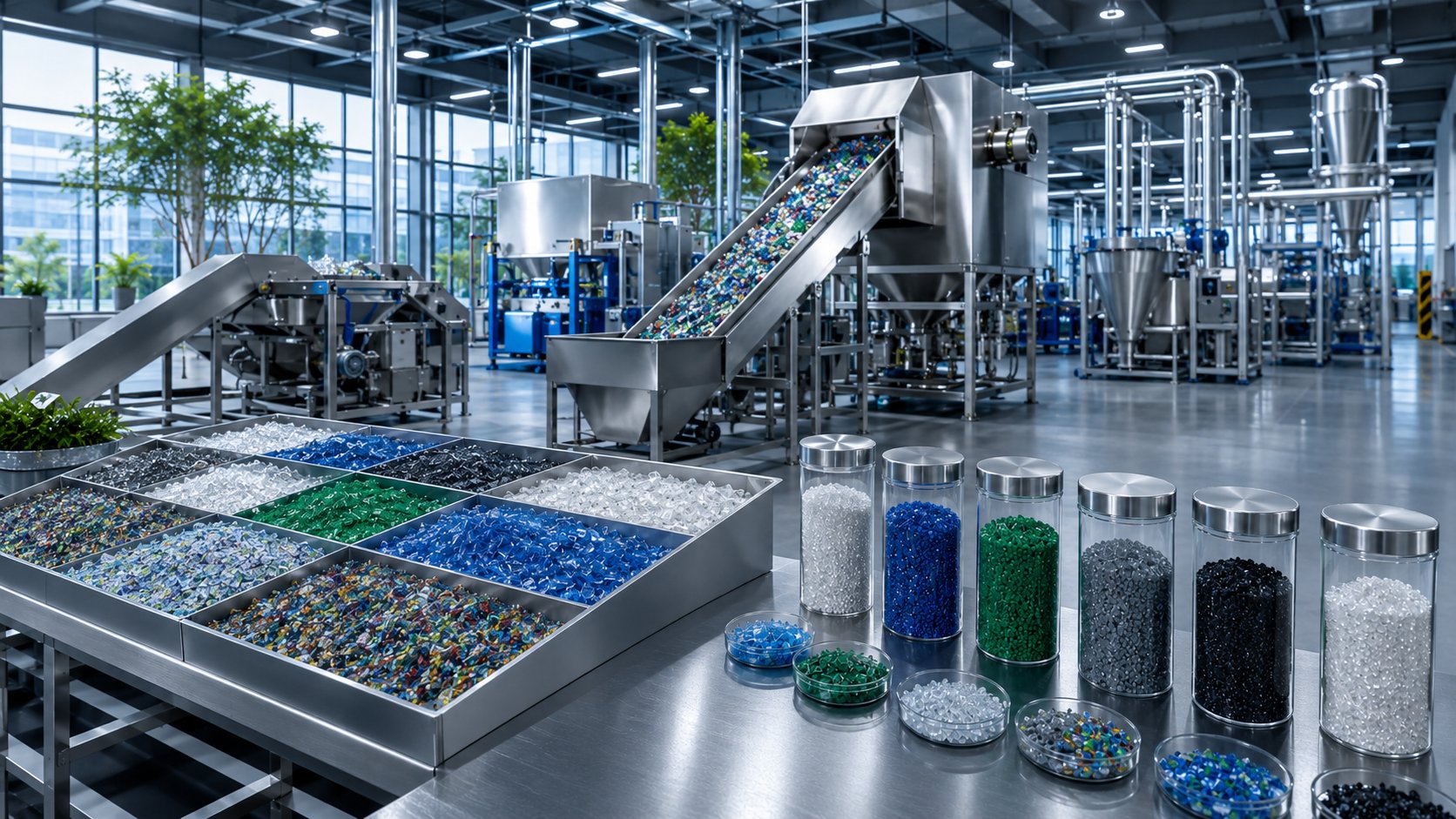
Mechanical recycling is the most established and widely recognized form of plastic recycling. It physically processes plastic waste without fundamentally changing the polymer’s chemical structure. The basic steps often include sorting, washing, shredding, drying, melting, filtering, pelletizing, and remanufacturing. Once plastics are sorted, they are cleaned to remove labels, adhesives, dirt, food residue, oils, and other contaminants. Clean material is shredded or ground into flakes. These flakes may be washed again, dried, separated by density, and inspected for quality. The flakes can then be melted and extruded through filters that remove remaining particles. The melted plastic is formed into strands and cut into pellets, or processed directly into sheets, fibers, films, or molded parts.
Mechanical recycling works especially well for relatively clean and consistent thermoplastics such as PET, HDPE, and polypropylene. Recycled PET can become new bottles, textile fibers, strapping, thermoformed packaging, and sheet products. Recycled HDPE can become containers, pipe, lumber-like profiles, crates, bins, and industrial parts. Recycled polypropylene can be used in automotive components, household goods, storage products, and molded items.
The advantage of mechanical recycling is efficiency. It can be cost-effective, proven, and lower in complexity than more advanced chemical processes. The challenge is that plastic quality may decline over repeated heat histories and contamination events. Color, odor, additives, mixed resins, and degradation can limit where mechanically recycled plastic can be used. For this reason, mechanical recycling is strongest when input streams are clean, well sorted, and designed for recyclability from the start.
Washing, Grinding, and Pelletizing
The middle stages of mechanical recycling may seem simple, but they are highly important. Washing removes substances that could weaken the recycled resin or damage processing equipment. Food residue, paper labels, glue, dirt, and oils can all create problems. Hot washing, friction washing, float-sink tanks, rinsing, and drying may all be used depending on the material stream.
Grinding or shredding reduces plastic into small pieces that are easier to wash, separate, melt, and process. The size and shape of the flakes affect drying, conveying, melting, and final quality. A recycling facility may use different blade designs, screen sizes, and separation steps based on the type of plastic being processed.
Pelletizing turns recycled plastic into a familiar raw material format for manufacturers. Pellets are easier to ship, blend, dry, measure, and feed into equipment such as injection molding machines, extruders, blow molders, and compounding lines. In some cases, recycled flakes can be used directly, but pellets often create more consistent production behavior.
Quality control is critical during these steps. Recycled pellets may be tested for melt flow, moisture content, color, contamination, density, odor, mechanical strength, and compatibility with manufacturing requirements. The better the quality control, the more valuable the recycled resin becomes.
Chemical Recycling: Breaking Plastics Back Down
Chemical recycling refers to a group of technologies that use chemical processes to break plastics into smaller molecules, monomers, oils, gases, or other feedstocks. Unlike mechanical recycling, which preserves the polymer chain as much as possible, chemical recycling can transform plastic at the molecular level.
This approach can be valuable for plastics that are difficult to recycle mechanically, such as mixed plastics, degraded plastics, contaminated streams, multilayer packaging, textiles, foams, or materials with additives that reduce mechanical recycling quality. Chemical recycling aims to recover value from these challenging streams and potentially produce feedstocks that can be used to make new plastics, fuels, waxes, chemicals, or industrial materials.
There are several types of chemical recycling, including depolymerization, pyrolysis, gasification, solvolysis, and other advanced conversion methods. Each method works differently and is suited to different materials. Chemical recycling is not one universal process, and its environmental and economic performance depends heavily on technology, energy source, input quality, output use, and system design. Chemical recycling is exciting because it may expand what can be recovered. It is also complex because it requires careful attention to emissions, energy demand, economics, product quality, and claims about circularity. When used appropriately, it can complement mechanical recycling rather than replace it.
Depolymerization: Returning Polymers to Building Blocks
Depolymerization is a chemical recycling method that breaks certain polymers back into their original monomers or useful chemical building blocks. This approach is especially relevant for condensation polymers such as PET, nylon, and certain polyesters, where chemical bonds can be targeted and reversed under controlled conditions.
For PET recycling, depolymerization can use methods such as glycolysis, methanolysis, or hydrolysis to break the polymer into smaller components that can be purified and used to make new PET. This is valuable because it can potentially produce material with quality similar to virgin resin, especially when the process removes colorants, additives, or contaminants.
Depolymerization is not suitable for every plastic. Polyethylene and polypropylene, for example, do not depolymerize into simple monomers as easily as PET. They require different chemical recycling approaches. Still, for certain polymer families, depolymerization offers a promising route for closed-loop recycling, especially when high purity and performance are required.
The value of depolymerization lies in precision. Instead of simply melting plastic into a lower-grade product, it can rebuild the material from purified chemical ingredients. That makes it especially interesting for packaging, textiles, and applications where material quality must remain high.
Pyrolysis: Converting Plastic Waste Into Hydrocarbon Feedstocks
Pyrolysis is an advanced recycling method that heats plastic waste in a low-oxygen or oxygen-free environment. Instead of burning the plastic, the process thermally breaks polymer chains into smaller hydrocarbon molecules. The outputs may include pyrolysis oil, gas, char, or wax-like materials, depending on the feedstock and operating conditions. Pyrolysis is commonly discussed for polyolefins such as polyethylene and polypropylene. These plastics are difficult to depolymerize into monomers, but their hydrocarbon chains can be converted into oil-like feedstocks. Those feedstocks may then be refined and used in petrochemical processes, potentially creating new plastics or other chemical products.
The promise of pyrolysis is its ability to handle plastic streams that mechanical recycling struggles with, including some mixed or flexible materials. The challenges include controlling contamination, improving yield, managing energy use, upgrading outputs, and ensuring that the final products support circular material production rather than simply becoming fuel. Pyrolysis can play an important role in advanced plastic recycling when it is integrated responsibly. Its strongest value comes when outputs are directed back into materials, helping displace virgin feedstocks and supporting circular polymer manufacturing.
Gasification and Other Advanced Conversion Methods
Gasification is another advanced recycling technology that converts carbon-containing materials into synthesis gas, often called syngas. This gas mixture can be used to produce chemicals, fuels, hydrogen, or other industrial feedstocks. Plastic waste can be part of a gasification feedstock stream, although the process is complex and requires careful control.
Other advanced conversion methods include solvolysis, enzymatic recycling for specific polymers, dissolution purification, and selective solvent-based processes. Dissolution is particularly interesting because it can separate and purify polymers without fully breaking them down chemically. In this method, a target polymer is dissolved, filtered away from contaminants, and then recovered. This may help recycle materials that contain additives, colors, or mixed components.
Enzymatic recycling is an emerging area, especially for certain polyesters. It uses engineered enzymes to break down polymer chains under controlled conditions. While still developing, it points toward a future where biology and material science may work together to improve recycling precision. Advanced recycling methods are not all equal. Some are close to commercial use, while others remain experimental or limited to specific material streams. Their success will depend on scalability, cost, environmental performance, policy, infrastructure, and demand for recycled outputs.
The Role of Design for Recycling
Recycling does not begin at the recycling facility. It begins at the design table. Products that are easier to identify, separate, clean, and process are more likely to be recycled successfully. Design for recycling means choosing materials, colors, adhesives, labels, coatings, and assemblies with end-of-life recovery in mind.
A bottle made from one main polymer with a compatible cap and washable label is usually easier to recycle than a multilayer package bonded from several incompatible materials. Clear plastics may have higher recycling value than heavily pigmented plastics. Removable components can improve recovery. Avoiding unnecessary additives can make recycled material more consistent.
Designers and brands have enormous influence over recycling outcomes. A product may technically be recyclable, but if it cannot be sorted, cleaned, or sold into a viable market, it may not be recycled in practice. Practical recyclability requires alignment between product design, collection systems, sorting technology, processing capacity, and market demand.
The best recycling systems are not built only downstream. They are built into the product from the beginning.
Recycled Plastic in New Products
Recycled plastic can become many different products, depending on quality and resin type. High-quality recycled PET may become new beverage bottles, food packaging, fibers, films, and sheet. Recycled HDPE may become containers, pipe, outdoor furniture, decking, bins, pallets, and industrial products. Recycled polypropylene may appear in automotive parts, storage products, packaging, and household goods.
Manufacturers may use recycled content to reduce virgin material demand and support sustainability goals. However, recycled resin must still meet performance requirements. It may need testing for strength, melt flow, odor, color consistency, contamination, and regulatory compliance. Food-contact applications often require additional controls and approvals.
Recycled material can be blended with virgin resin to improve consistency. Additives and compatibilizers can also help restore performance or allow mixed-polymer streams to be used more effectively. As recycling technology improves, recycled plastics are becoming more reliable, more available, and more accepted in demanding applications.
Challenges in Plastic Recycling
Plastic recycling faces several obstacles. Contamination is one of the biggest. Food residue, non-recyclable materials, mixed resins, labels, adhesives, and dirt can reduce the quality of recycled plastic. Sorting errors can also create problems, especially when small amounts of incompatible plastics enter a stream.
Material complexity is another challenge. Modern packaging may use multiple layers to improve shelf life, moisture resistance, oxygen barriers, and seal strength. While these packages can perform extremely well, they may be difficult to recycle mechanically. Flexible films, black plastics, small items, and heavily colored materials may also create sorting or market challenges.
Economics matter as well. Recycling must compete with virgin resin prices, transportation costs, processing costs, and fluctuating demand. A recycling system cannot succeed only because material is collected. There must be a market for the recycled output.
Public confusion can also weaken results. Recycling rules vary by location, and labels are not always clear. A plastic item accepted in one community may not be accepted in another. Better education, clearer labeling, and more consistent systems can help reduce contamination and improve recovery.
The Future of Advanced Polymer Recycling
The future of plastic recycling will likely combine multiple methods. Mechanical recycling will remain essential for clean, high-volume streams. Chemical recycling may help address materials that mechanical systems cannot handle well. Dissolution, depolymerization, pyrolysis, and biological methods may each find specialized roles. Digital watermarks, AI sorting, robotic picking, and advanced sensors may improve material identification and recovery rates.
A stronger circular economy will also require better product design, extended producer responsibility, recycled-content standards, reusable packaging models, and more investment in recycling infrastructure. No single technology can solve the plastics challenge alone. Progress will come from systems that connect design, collection, processing, policy, manufacturing, and consumer behavior.
Advanced recycling should be measured by real outcomes. Does it reduce virgin material use? Does it produce high-value feedstocks? Does it lower environmental impact? Does it complement mechanical recycling rather than compete for clean material? Does it help recover plastics that would otherwise be landfilled or leaked into the environment? These are the questions that will shape responsible growth.
From Plastic Waste to Polymer Resource
Plastic recycling is a complex but powerful part of modern material management. Mechanical recycling turns clean, sorted plastics into flakes, pellets, and new products. Chemical recycling breaks certain plastics into molecular building blocks or feedstocks. Advanced polymer recycling expands the possibilities with purification, conversion, depolymerization, and emerging technologies.
The most effective future will not depend on one method. It will use the right recycling pathway for the right material. A clear PET bottle may be best served by mechanical recycling or depolymerization. A clean HDPE container may become new molded products through mechanical processing. A mixed polyolefin film stream may require advanced conversion. A complex multilayer material may need redesign before it can become truly circular.
Plastic recycling works best when every stage supports the next. Products must be designed for recovery. Consumers and businesses must sort responsibly. Facilities must identify and process materials accurately. Manufacturers must use recycled content. Innovators must continue improving the technologies that recover value from difficult streams.
When plastic is treated as waste, its story ends too soon. When it is treated as a resource, it can begin again as packaging, fiber, furniture, construction material, automotive parts, industrial components, or even new polymer feedstock. The future of recycling is not just about cleaning up the past. It is about building smarter material loops for the products of tomorrow.