The Best Plastics for Vacuum Forming Depend on Strength, Finish, and Use
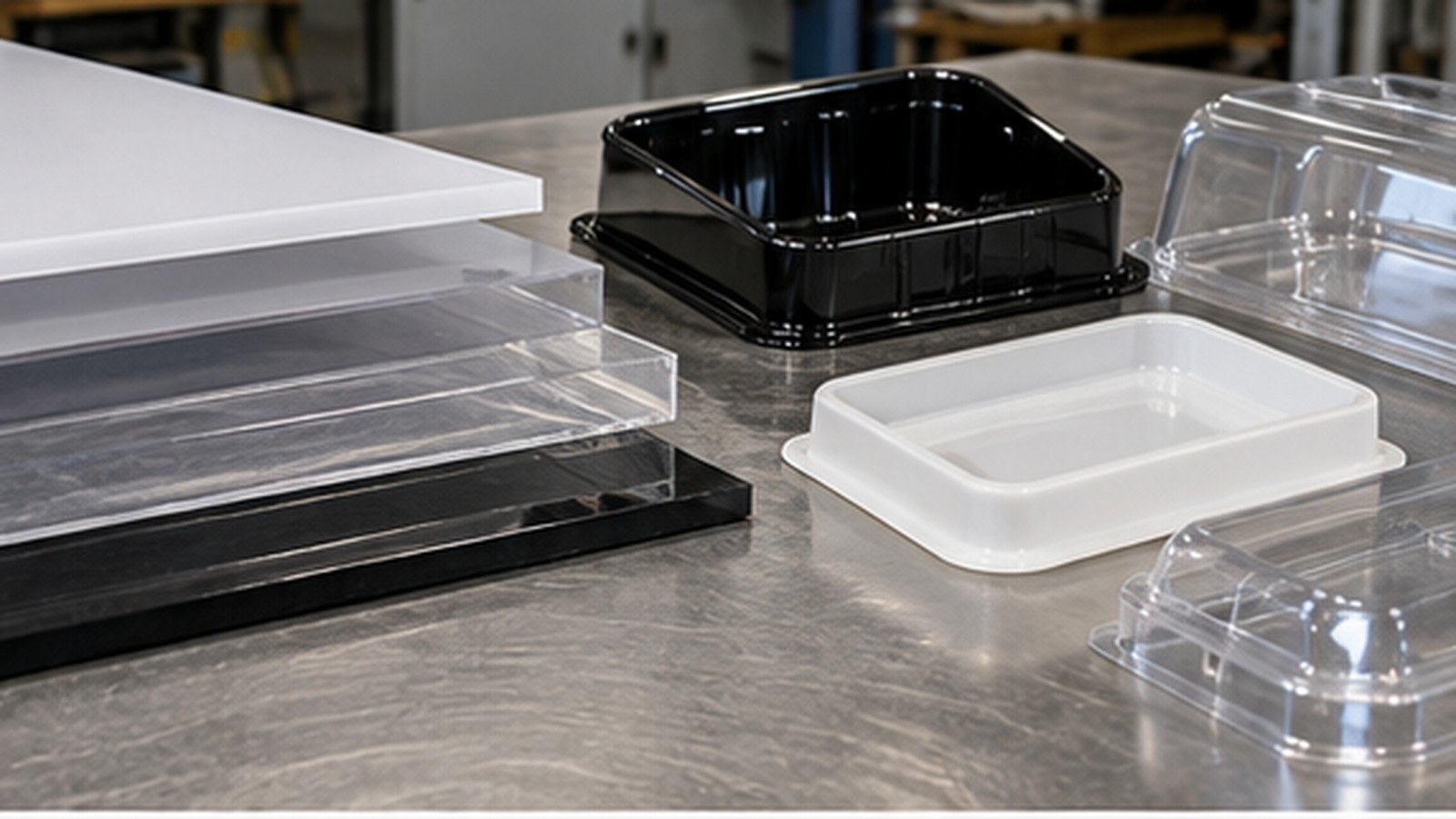
Vacuum forming works with many thermoplastic sheets, but the best plastic depends on what the finished part must do. ABS, PETG, HIPS, acrylic, polycarbonate, PVC, and specialty materials each bring different forming temperature, toughness, clarity, stiffness, cost, surface finish, and trimming behavior. A good material choice balances appearance, performance, forming reliability, and the environment where the part will live.
A: Clear design intent, suitable material, controlled setup, safe workflow, and repeatable inspection.
A: It shows how the material and tool settings behave before the final part is at risk.
A: No. Tighter tolerance costs more and only helps when the function requires it.
A: Tool wear, speed, feed, abrasive choice, heat, vibration, or weak support can all contribute.
A: Heat, internal stress, uneven removal, poor clamping, or forming pressure can move material.
A: Use templates, mark clearly, cut oversize when appropriate, and inspect before each irreversible step.
A: Prototypes test ideas, while production work controls repeatability.
A: Surface prep, cleaning, masking, curing, and inspection often require more time than the main cut.
A: Ventilation and dust control are often overlooked until a process creates fumes or fine particles.
A: Confirm fit, function, finish, documentation, and any maintenance needs.
ABS for Durable Housings
ABS is popular for vacuum formed housings, covers, trays, and panels because it balances toughness, formability, cost, and paintability.
It is often used when the part needs more impact resistance than a brittle display plastic. Surface texture, UV exposure, and heat conditions should still be checked.
In shop terms, abs for durable housings affects how the fabrication work moves from a drawing into a part that can be held, cut, checked, and finished. For this fabrication project, that keeps the choice grounded in the actual build rather than a generic preference. It also gives the builder a specific thing to watch while abs for durable housings moves from plan to shop work.
The detail deserves a small reality check before the next operation. A sample, dry fit, or first-piece inspection can show whether the plan is behaving as expected. A quick measurement or shop note at this point can prevent a much larger correction later and keep the next operation from hiding the problem. That kind of early review is usually faster than repairing a finished part after the mistake is buried.
That check gives the team a concrete signal instead of a vague impression. If fit, edge quality, release, alignment, or finish starts to drift, the process can be corrected early. It also makes responsibility clearer when design, setup, cutting, and finishing overlap. For this fabrication project, the same habit supports cleaner communication between design, fabrication, inspection, and finishing.
The practical next step is to document the setting, mark the feature clearly, and keep the result tied to the drawing so the same choice can be repeated later. The result is a abs for durable housings decision that can be inspected, explained, and improved on the next run without rebuilding the whole plan. The payoff is a part that reaches the next step with fewer surprises and a clearer record of what changed.
PETG for Clarity and Toughness
PETG is useful for clear covers, guards, displays, and packaging because it offers clarity with better impact resistance than some brittle clear materials.
It forms well, but heat control matters. Overheating or poor handling can affect clarity, surface quality, or trimming behavior.
For this fabrication project, petg for clarity and toughness is not an isolated detail. It influences material selection, setup time, tool access, and the amount of correction needed after the main operation. That keeps the work tied to fit, finish, safety, and cost instead of treating the detail as decoration. It also gives the builder a specific thing to watch while petg for clarity and toughness moves from plan to shop work.
A builder can treat this part of the work as a decision point: continue with the current setup, adjust the geometry, change the tool, or run a smaller trial first. When petg for clarity and toughness is checked early, the builder has more options and less pressure to force a fix at the end after the part is already committed. That kind of early review is usually faster than repairing a finished part after the mistake is buried.
That decision is easier when the part is checked against the real stock and the real mating surfaces rather than only against an ideal model. It also gives the next person in the workflow a clearer reason for the chosen setup. For this fabrication project, the same habit supports cleaner communication between design, fabrication, inspection, and finishing.
Good notes matter here because they turn one successful setup into a repeatable method for the next part, batch, repair, or revision. For this fabrication project, that record can be reused when the material, tooling, or quantity changes and the shop needs the same result again. The payoff is a part that reaches the next step with fewer surprises and a clearer record of what changed.
HIPS for Economical Forming
High-impact polystyrene is common in packaging, display work, models, and prototypes because it forms easily and is relatively economical.
HIPS is not the strongest or most weather-resistant option, but it can be a practical choice for indoor parts, prototypes, and short-run display components.
The value of hips for economical forming becomes clear when the project reaches the bench. Small differences in thickness, radius, heat, clamp pressure, or surface prep can change the result. For this fabrication project, the payoff is fewer surprises when the part reaches assembly or finishing. It also gives the builder a specific thing to watch while hips for economical forming moves from plan to shop work.
Instead of waiting for final assembly to reveal the issue, the shop can look for early signs: uneven fit, rough edges, distortion, poor release, or extra finishing work. A short pause here can protect the schedule because the correction is still small and visible. That kind of early review is usually faster than repairing a finished part after the mistake is buried.
Those signs help separate a design issue from a setup issue. The fix may be a cleaner drawing note, a different sequence, a new fixture, or a more suitable material. That makes hips for economical forming a practical control point instead of a vague shop preference, especially when multiple people touch the same job. For this fabrication project, the same habit supports cleaner communication between design, fabrication, inspection, and finishing.
Handled this way, the topic becomes a working checklist rather than filler. It points to the specific shop condition that needs attention before the job advances. The next build starts from a known condition rather than from memory or guesswork. The payoff is a part that reaches the next step with fewer surprises and a clearer record of what changed.
Acrylic for Gloss and Display Work
Acrylic is chosen for clarity, gloss, and visual quality. It can work well for display faces, lighting elements, and decorative formed parts.
It is more brittle than some alternatives, so design, trimming, and handling need care. Sharp corners and deep draws can create stress or cracks.
Acrylic for gloss and display work also shapes communication. Designers, programmers, fabricators, and finishers need to know which surfaces matter and which dimensions have room to breathe. That context helps the team avoid spending time on details that do not change performance. It also gives the builder a specific thing to watch while acrylic for gloss and display work moves from plan to shop work.
When that priority is clear, the shop can spend effort where it improves the finished part instead of chasing precision or polish in the wrong place. Checked early, acrylic for gloss and display work can guide a better fixture, clearer drawing note, or cleaner finishing plan before the expensive steps begin. That kind of early review is usually faster than repairing a finished part after the mistake is buried.
The best review point is simple: compare the part to its function, not just to its appearance. Fit, strength, safety, and service conditions decide whether the work is ready. The process also becomes easier to teach because the reason behind the step is visible. For this fabrication project, the same habit supports cleaner communication between design, fabrication, inspection, and finishing.
If the review exposes a problem, changing one variable at a time keeps the lesson useful. That habit prevents the next attempt from becoming another guess. For this fabrication project, that kind of clarity is what turns a one-off success into a repeatable method instead of a lucky result. The payoff is a part that reaches the next step with fewer surprises and a clearer record of what changed.
Polycarbonate for Impact Resistance
Polycarbonate offers high impact resistance and is useful for guards, covers, and demanding transparent parts.
It can be more challenging to form and may require drying, controlled heat, and careful tool design. The performance benefit comes with process discipline.
In a real fabrication workflow, polycarbonate for impact resistance often determines whether a project feels controlled or improvised. It affects setup choices before anyone reaches the final finish. For this fabrication project, this keeps the work practical and prevents the design intent from getting lost on the bench. It also gives the builder a specific thing to watch while polycarbonate for impact resistance moves from plan to shop work.
The safest approach is to confirm the feature while it can still be changed. Once parts are welded, coated, bonded, or delivered, small corrections become expensive. The review does not need to be formal; it needs to happen while the part can still be changed. That kind of early review is usually faster than repairing a finished part after the mistake is buried.
Early confirmation can be as simple as a layout review, a gauge check, a scrap test, or a short conversation between the person designing and the person building. That makes polycarbonate for impact resistance easier to connect with material behavior, operator safety, and final quality in a way the whole team can follow. For this fabrication project, the same habit supports cleaner communication between design, fabrication, inspection, and finishing.
That feedback loop protects schedule and material. It also keeps the subject tied to decisions a maker can actually use in the shop. A clear record also helps future repairs, repeat orders, and design revisions move faster. The payoff is a part that reaches the next step with fewer surprises and a clearer record of what changed.
PVC and Specialty Sheets
PVC and specialty thermoforming sheets may be used for chemical resistance, color, texture, flame behavior, or specific industry requirements.
Material data and safety requirements matter. Some plastics create fumes or have forming limits that require specific ventilation and procedures.
Pvc and specialty sheets is worth slowing down for because it sits at the boundary between design intent and shop reality. That is especially useful when the same project involves several machines, materials, or finishing steps. It also gives the builder a specific thing to watch while pvc and specialty sheets moves from plan to shop work.
If the operation is rushed, the first warning may appear as rework: extra sanding, a stuck part, a poor joint, a warped edge, or a dimension that no longer matches the assembly. If pvc and specialty sheets creates trouble, the team can still adjust the sequence before the problem is buried under later cuts, coatings, or assemblies. That kind of early review is usually faster than repairing a finished part after the mistake is buried.
A better workflow builds in a midpoint review. The part is checked while there is still time to adjust toolpath, pressure, heat, fixture location, or finish preparation. The lesson is more valuable when the change is measured, named, and connected to the result. For this fabrication project, the same habit supports cleaner communication between design, fabrication, inspection, and finishing.
That review does not make the job complicated. It keeps the work honest by connecting each visible detail to the process that created it. For this fabrication project, that makes the workflow sturdier without adding unnecessary complexity or slowing every future job. The payoff is a part that reaches the next step with fewer surprises and a clearer record of what changed.
Sheet Thickness and Draw Depth
The same material behaves differently at different thicknesses. Thicker sheet may hold strength but need more heat, while thinner sheet forms easily but may weaken in deep draws.
Draw depth, corner radius, and part size should guide thickness. A sample pull is often the fastest way to confirm the choice.
For a maker or small shop, sheet thickness and draw depth is often where experience turns into judgment. The drawing may name the feature, but the material decides how forgiving it will be. For this fabrication project, that judgment helps separate what must be controlled from what can vary safely. It also gives the builder a specific thing to watch while sheet thickness and draw depth moves from plan to shop work.
Watching the first piece closely helps reveal whether the chosen process is stable. A clean result on one sample is useful only if the method can be repeated. The first piece is the best place to learn because it exposes problems before they multiply. That kind of early review is usually faster than repairing a finished part after the mistake is buried.
Repeatability comes from boring habits that work: consistent setup, labeled parts, measured changes, clean surfaces, and tools that are maintained before they force a mistake. When sheet thickness and draw depth is recorded clearly, the next setup begins with a shop record instead of a fresh guess about what worked last time. For this fabrication project, the same habit supports cleaner communication between design, fabrication, inspection, and finishing.
Those habits make the fabrication process easier to improve because every revision has a known starting point instead of a pile of disconnected fixes. That is how small fabrication habits become durable process knowledge. The payoff is a part that reaches the next step with fewer surprises and a clearer record of what changed.
Choosing the Best Plastic
Choose by function first: clarity, toughness, cost, paintability, outdoor use, food contact, impact resistance, or cosmetic finish.
The best plastic is the one that forms reliably, trims cleanly, meets the part’s performance needs, and fits the production budget.
Choosing the best plastic is best judged by the finished use of the part. A decorative panel, structural bracket, mold, enclosure, or prototype may need a different level of control. That keeps the decision useful for the person making the part, not only for the person reviewing the drawing. It also gives the builder a specific thing to watch while choosing the best plastic moves from plan to shop work.
The shop can avoid overbuilding by asking which surfaces carry load, which edges are handled, which features locate the assembly, and which details mostly affect appearance. Early control over choosing the best plastic also reduces the temptation to hide a problem with extra finishing work after the core process has already drifted. That kind of early review is usually faster than repairing a finished part after the mistake is buried.
That question keeps cost and quality in balance. It helps the builder decide where to accept ordinary variation and where to tighten the process. The goal is a part that meets its purpose with the least amount of rework and confusion. For this fabrication project, the same habit supports cleaner communication between design, fabrication, inspection, and finishing.
Once that choice is made, the work becomes easier to explain, inspect, and repeat because the reason behind the detail is visible. For this fabrication project, that balance is often what separates a clean build from a frustrating one when the schedule gets tight. The payoff is a part that reaches the next step with fewer surprises and a clearer record of what changed.
Bottom Line on Best Plastics for Vacuum Forming
The best vacuum forming plastic depends on the job. ABS, PETG, HIPS, acrylic, polycarbonate, PVC, and specialty sheets each fit different needs for clarity, toughness, cost, finish, and forming reliability.