Advanced Composites Combine Fibers, Resins, and Process Control
Advanced composites are materials made by combining reinforcing fibers with a matrix that holds them in place. Carbon fiber, fiberglass, aramid fiber, resin systems, core materials, prepregs, and laminates all fall into the larger composite world. Their appeal is high strength-to-weight performance, corrosion resistance, shape flexibility, and tailored stiffness. Their challenge is that performance depends heavily on design, fiber direction, resin selection, tooling, curing, inspection, and repair planning.
A: Clear design intent, suitable material, controlled setup, safe workflow, and repeatable inspection.
A: It shows how the material and tool settings behave before the final part is at risk.
A: No. Tighter tolerance costs more and only helps when the function requires it.
A: Tool wear, speed, feed, abrasive choice, heat, vibration, or weak support can all contribute.
A: Heat, internal stress, uneven removal, poor clamping, or forming pressure can move material.
A: Use templates, mark clearly, cut oversize when appropriate, and inspect before each irreversible step.
A: Prototypes test ideas, while production work controls repeatability.
A: Surface prep, cleaning, masking, curing, and inspection often require more time than the main cut.
A: Ventilation and dust control are often overlooked until a process creates fumes or fine particles.
A: Confirm fit, function, finish, documentation, and any maintenance needs.
What Makes a Composite Advanced
A composite becomes advanced when the reinforcement, matrix, layout, and process are engineered for specific performance. The material is not just mixed together; it is arranged so loads travel through the right fibers.
That design freedom is powerful. A part can be stiff in one direction, flexible in another, light in the middle, and reinforced only where the load demands it.
In shop terms, makes a composite advanced affects how the fabrication work moves from a drawing into a part that can be held, cut, checked, and finished. For this fabrication project, that keeps the choice grounded in the actual build rather than a generic preference. It also gives the builder a specific thing to watch while makes a composite advanced moves from plan to shop work.
The detail deserves a small reality check before the next operation. A sample, dry fit, or first-piece inspection can show whether the plan is behaving as expected. A quick measurement or shop note at this point can prevent a much larger correction later and keep the next operation from hiding the problem. That kind of early review is usually faster than repairing a finished part after the mistake is buried.
That check gives the team a concrete signal instead of a vague impression. If fit, edge quality, release, alignment, or finish starts to drift, the process can be corrected early. It also makes responsibility clearer when design, setup, cutting, and finishing overlap. For this fabrication project, the same habit supports cleaner communication between design, fabrication, inspection, and finishing.
The practical next step is to document the setting, mark the feature clearly, and keep the result tied to the drawing so the same choice can be repeated later. The result is a makes a composite advanced decision that can be inspected, explained, and improved on the next run without rebuilding the whole plan. The payoff is a part that reaches the next step with fewer surprises and a clearer record of what changed.
Common Fiber Types
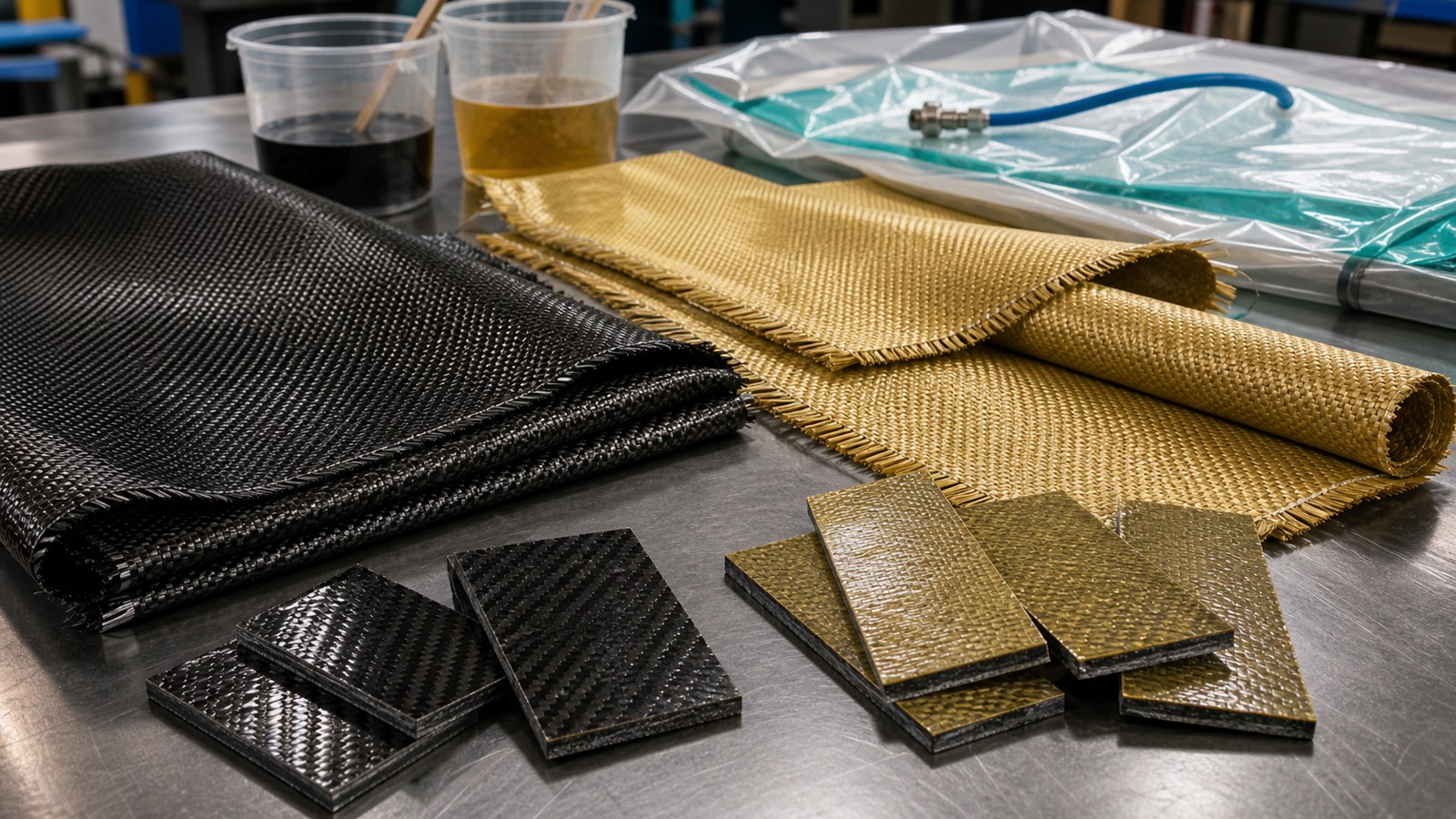
Carbon fiber offers high stiffness and low weight. Fiberglass is more economical and handles many general fabrication needs. Aramid fibers can add toughness and impact resistance.
Each fiber behaves differently in tension, compression, impact, heat, and fatigue. The best choice depends on the part’s job rather than the reputation of a single material.
For this fabrication project, common fiber types is not an isolated detail. It influences material selection, setup time, tool access, and the amount of correction needed after the main operation. That keeps the work tied to fit, finish, safety, and cost instead of treating the detail as decoration. It also gives the builder a specific thing to watch while common fiber types moves from plan to shop work.
A builder can treat this part of the work as a decision point: continue with the current setup, adjust the geometry, change the tool, or run a smaller trial first. When common fiber types is checked early, the builder has more options and less pressure to force a fix at the end after the part is already committed. That kind of early review is usually faster than repairing a finished part after the mistake is buried.
That decision is easier when the part is checked against the real stock and the real mating surfaces rather than only against an ideal model. It also gives the next person in the workflow a clearer reason for the chosen setup. For this fabrication project, the same habit supports cleaner communication between design, fabrication, inspection, and finishing.
Good notes matter here because they turn one successful setup into a repeatable method for the next part, batch, repair, or revision. For this fabrication project, that record can be reused when the material, tooling, or quantity changes and the shop needs the same result again. The payoff is a part that reaches the next step with fewer surprises and a clearer record of what changed.
Resins and Matrix Materials
The resin binds the fibers, transfers load, protects the reinforcement, and gives the laminate its shape. Epoxy, polyester, vinyl ester, thermoplastics, and specialty systems all have uses.
Resin selection affects cure, temperature limits, chemical resistance, toughness, cost, and production method. A high-performance fiber cannot overcome the wrong matrix.
The value of resins and matrix materials becomes clear when the project reaches the bench. Small differences in thickness, radius, heat, clamp pressure, or surface prep can change the result. For this fabrication project, the payoff is fewer surprises when the part reaches assembly or finishing. It also gives the builder a specific thing to watch while resins and matrix materials moves from plan to shop work.
Instead of waiting for final assembly to reveal the issue, the shop can look for early signs: uneven fit, rough edges, distortion, poor release, or extra finishing work. A short pause here can protect the schedule because the correction is still small and visible. That kind of early review is usually faster than repairing a finished part after the mistake is buried.
Those signs help separate a design issue from a setup issue. The fix may be a cleaner drawing note, a different sequence, a new fixture, or a more suitable material. That makes resins and matrix materials a practical control point instead of a vague shop preference, especially when multiple people touch the same job. For this fabrication project, the same habit supports cleaner communication between design, fabrication, inspection, and finishing.
Handled this way, the topic becomes a working checklist rather than filler. It points to the specific shop condition that needs attention before the job advances. The next build starts from a known condition rather than from memory or guesswork. The payoff is a part that reaches the next step with fewer surprises and a clearer record of what changed.
Fiber Direction and Layup
Composite strength follows fiber direction. A laminate with fibers at 0 degrees behaves differently than one with 45-degree or 90-degree layers.
Layup schedules are planned around load paths. Bending, torsion, impact, fasteners, holes, and edges often need local reinforcement to avoid weak spots.
Fiber direction and layup also shapes communication. Designers, programmers, fabricators, and finishers need to know which surfaces matter and which dimensions have room to breathe. That context helps the team avoid spending time on details that do not change performance. It also gives the builder a specific thing to watch while fiber direction and layup moves from plan to shop work.
When that priority is clear, the shop can spend effort where it improves the finished part instead of chasing precision or polish in the wrong place. Checked early, fiber direction and layup can guide a better fixture, clearer drawing note, or cleaner finishing plan before the expensive steps begin. That kind of early review is usually faster than repairing a finished part after the mistake is buried.
The best review point is simple: compare the part to its function, not just to its appearance. Fit, strength, safety, and service conditions decide whether the work is ready. The process also becomes easier to teach because the reason behind the step is visible. For this fabrication project, the same habit supports cleaner communication between design, fabrication, inspection, and finishing.
If the review exposes a problem, changing one variable at a time keeps the lesson useful. That habit prevents the next attempt from becoming another guess. For this fabrication project, that kind of clarity is what turns a one-off success into a repeatable method instead of a lucky result. The payoff is a part that reaches the next step with fewer surprises and a clearer record of what changed.
Core Materials and Sandwich Panels
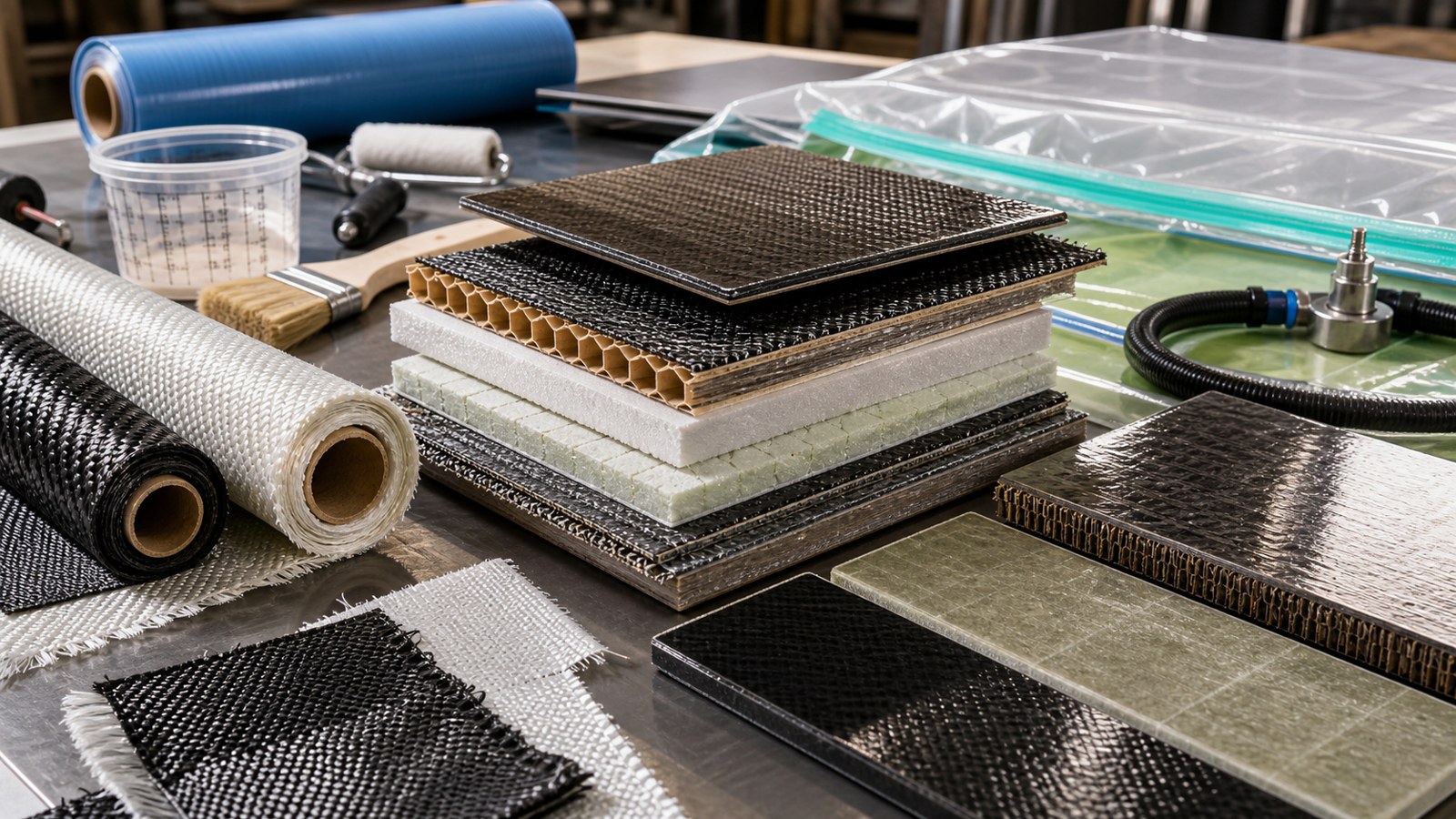
Foam, honeycomb, and balsa cores can separate composite skins to create stiff, lightweight panels. This structure is common in aerospace, marine, transportation, architecture, and tooling.
The core must match loads and environment. Crushing, water intrusion, skin separation, and edge sealing all matter in real service.
In a real fabrication workflow, core materials and sandwich panels often determines whether a project feels controlled or improvised. It affects setup choices before anyone reaches the final finish. For this fabrication project, this keeps the work practical and prevents the design intent from getting lost on the bench. It also gives the builder a specific thing to watch while core materials and sandwich panels moves from plan to shop work.
The safest approach is to confirm the feature while it can still be changed. Once parts are welded, coated, bonded, or delivered, small corrections become expensive. The review does not need to be formal; it needs to happen while the part can still be changed. That kind of early review is usually faster than repairing a finished part after the mistake is buried.
Early confirmation can be as simple as a layout review, a gauge check, a scrap test, or a short conversation between the person designing and the person building. That makes core materials and sandwich panels easier to connect with material behavior, operator safety, and final quality in a way the whole team can follow. For this fabrication project, the same habit supports cleaner communication between design, fabrication, inspection, and finishing.
That feedback loop protects schedule and material. It also keeps the subject tied to decisions a maker can actually use in the shop. A clear record also helps future repairs, repeat orders, and design revisions move faster. The payoff is a part that reaches the next step with fewer surprises and a clearer record of what changed.
Manufacturing Methods
Hand layup, vacuum bagging, resin infusion, compression molding, filament winding, autoclave curing, and automated fiber placement all produce different levels of control.
A prototype may use simple tools, while production may require repeatable molds, controlled temperature, measured resin flow, and inspection records.
Manufacturing methods is worth slowing down for because it sits at the boundary between design intent and shop reality. That is especially useful when the same project involves several machines, materials, or finishing steps. It also gives the builder a specific thing to watch while manufacturing methods moves from plan to shop work.
If the operation is rushed, the first warning may appear as rework: extra sanding, a stuck part, a poor joint, a warped edge, or a dimension that no longer matches the assembly. If manufacturing methods creates trouble, the team can still adjust the sequence before the problem is buried under later cuts, coatings, or assemblies. That kind of early review is usually faster than repairing a finished part after the mistake is buried.
A better workflow builds in a midpoint review. The part is checked while there is still time to adjust toolpath, pressure, heat, fixture location, or finish preparation. The lesson is more valuable when the change is measured, named, and connected to the result. For this fabrication project, the same habit supports cleaner communication between design, fabrication, inspection, and finishing.
That review does not make the job complicated. It keeps the work honest by connecting each visible detail to the process that created it. For this fabrication project, that makes the workflow sturdier without adding unnecessary complexity or slowing every future job. The payoff is a part that reaches the next step with fewer surprises and a clearer record of what changed.
Inspection and Failure Modes
Composites can fail through delamination, fiber breakage, resin cracking, impact damage, voids, poor cure, or weak bonds. Some damage is hidden below the surface.
Inspection may involve tap testing, ultrasound, visual checks, coupon testing, or load testing. The method depends on risk and part function.
For a maker or small shop, inspection and failure modes is often where experience turns into judgment. The drawing may name the feature, but the material decides how forgiving it will be. For this fabrication project, that judgment helps separate what must be controlled from what can vary safely. It also gives the builder a specific thing to watch while inspection and failure modes moves from plan to shop work.
Watching the first piece closely helps reveal whether the chosen process is stable. A clean result on one sample is useful only if the method can be repeated. The first piece is the best place to learn because it exposes problems before they multiply. That kind of early review is usually faster than repairing a finished part after the mistake is buried.
Repeatability comes from boring habits that work: consistent setup, labeled parts, measured changes, clean surfaces, and tools that are maintained before they force a mistake. When inspection and failure modes is recorded clearly, the next setup begins with a shop record instead of a fresh guess about what worked last time. For this fabrication project, the same habit supports cleaner communication between design, fabrication, inspection, and finishing.
Those habits make the fabrication process easier to improve because every revision has a known starting point instead of a pile of disconnected fixes. That is how small fabrication habits become durable process knowledge. The payoff is a part that reaches the next step with fewer surprises and a clearer record of what changed.
Where Composites Fit
Advanced composites are valuable when weight, corrosion resistance, stiffness, fatigue performance, or complex shape justify the process. They are common in aircraft, race vehicles, sporting goods, robotics, marine parts, medical devices, and tooling.
They are not automatically better than metal or plastic. Cost, repair, fire behavior, recyclability, fasteners, and production volume all affect the decision.
Where composites fit is best judged by the finished use of the part. A decorative panel, structural bracket, mold, enclosure, or prototype may need a different level of control. That keeps the decision useful for the person making the part, not only for the person reviewing the drawing. It also gives the builder a specific thing to watch while where composites fit moves from plan to shop work.
The shop can avoid overbuilding by asking which surfaces carry load, which edges are handled, which features locate the assembly, and which details mostly affect appearance. Early control over where composites fit also reduces the temptation to hide a problem with extra finishing work after the core process has already drifted. That kind of early review is usually faster than repairing a finished part after the mistake is buried.
That question keeps cost and quality in balance. It helps the builder decide where to accept ordinary variation and where to tighten the process. The goal is a part that meets its purpose with the least amount of rework and confusion. For this fabrication project, the same habit supports cleaner communication between design, fabrication, inspection, and finishing.
Once that choice is made, the work becomes easier to explain, inspect, and repeat because the reason behind the detail is visible. For this fabrication project, that balance is often what separates a clean build from a frustrating one when the schedule gets tight. The payoff is a part that reaches the next step with fewer surprises and a clearer record of what changed.
Bottom Line on Advanced Composites
Advanced composites are strongest when material choice, fiber direction, resin, tooling, cure, and inspection are designed as one system. Their value comes from tailored performance, not from using carbon fiber or resin as a shortcut.